Loading...
Please wait while we prepare the content
Loading...
Please wait while we prepare the content
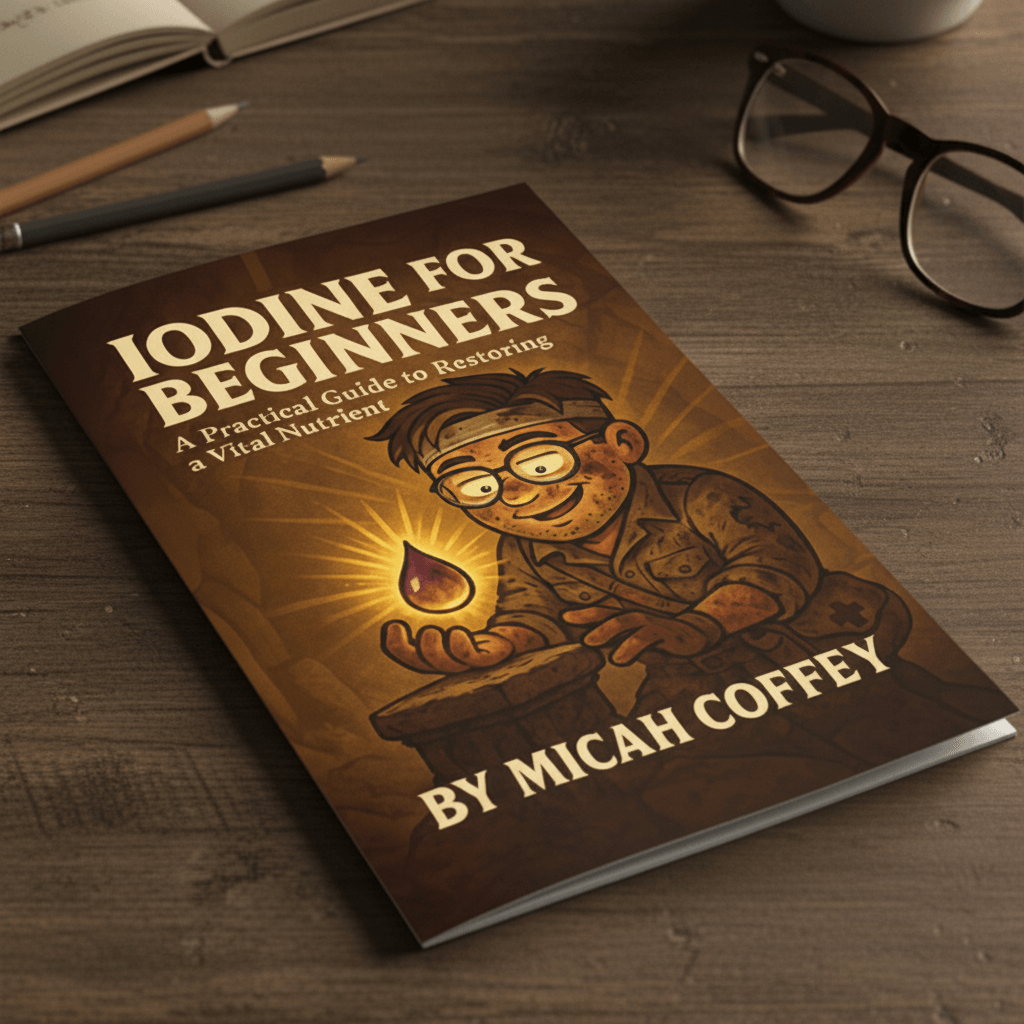
Free eBook
Everything covered on this site — condensed into a short, free book. How deficiency happens, what detox looks like, and how to start restoring what our bodies have been missing.
The liver, kidneys, and lymphatic system do the heavy lifting during detox. They need support to keep up.
When the iodine protocol mobilizes stored toxins like bromine, those toxins need to go somewhere. The liver processes them, the kidneys filter them, the gut eliminates them, and the lymphatic system transports them. If these systems are overwhelmed, detox symptoms intensify and persist.
Supporting these organs is not complicated, but it can make the difference between a manageable detox and a miserable one. Many people who "cannot tolerate iodine" are actually experiencing overwhelmed elimination organs — not iodine intolerance.
Think of it this way: iodine is the demolition crew knocking down walls. The elimination organs are the trucks hauling the debris away. If the trucks cannot keep up, rubble piles up everywhere and the whole site becomes a mess. The solution is not to stop demolition — it is to bring in more trucks.
Three organ systems do the heavy lifting during detox: the liver, the kidneys, and the gut. Each has a distinct role, and all three need to be functioning well for toxins to move efficiently from storage to elimination.
The body's primary detox processor. Converts fat-soluble toxins into water-soluble forms that can be eliminated. Runs in two phases that both need nutritional support.
Filter the blood and excrete water-soluble toxins through urine. Salt loading supports kidney function by providing chloride to bind and flush bromide.
Processed toxins are dumped into bile and eliminated through the gut. If the gut is sluggish or constipated, toxins get reabsorbed — the enterohepatic cycle.
Transports toxins from tissues to the liver and kidneys. Has no pump of its own — relies on physical movement, deep breathing, and muscle contraction.
The largest organ and a backup elimination route. When liver and kidneys are overwhelmed, the body pushes toxins out through sweat and skin eruptions.
Volatile toxins and metabolic waste products are exhaled. Deep breathing supports lymphatic flow and toxin elimination through the breath.
One of the most common mistakes in the iodine community is jumping to high doses before the elimination organs are ready. The logic makes sense — if iodine is good, more must be better. But more iodine means more toxin mobilization, and if the body cannot keep up with elimination, the result is intensified detox symptoms.
This is why the protocol recommends starting with supporting nutrients (selenium, magnesium, unrefined salt, vitamin C, B vitamins) for at least two weeks BEFORE adding iodine. Those nutrients support organ function, prime the elimination pathways, and give the body a head start.
For those who are very toxic, very sensitive, or dealing with chronic illness, an even longer organ-prep phase may be appropriate. Some people spend a month or more building up their supporting nutrients and diet before introducing even a single drop of iodine.
Step 1: Clean up the diet (reduce incoming toxins). Step 2: Start supporting nutrients (selenium, magnesium, salt, vitamin C, B vitamins). Step 3: Support elimination organs (liver, kidneys, gut). Step 4: Begin iodine at the lowest dose and increase slowly. Skipping steps 1-3 is the most common cause of "iodine intolerance."
Supporting the elimination organs does not require expensive supplements or complicated protocols. Simple, time-tested approaches work well for most of us.
Liver: Milk Thistle (Silymarin)
A well-researched herb that supports liver cell regeneration and protects against toxin damage. Standard dose is 200-400mg of standardized extract daily.
Liver: NAC (N-Acetyl Cysteine)
A precursor to glutathione, the body's master antioxidant. Supports both phase 1 and phase 2 liver detoxification. 600-1200mg daily.
Liver: Cruciferous Vegetables
Broccoli, cabbage, kale, and Brussels sprouts provide sulforaphane and indole-3-carbinol — compounds that directly support phase 2 liver detox pathways.
Kidneys: Adequate Hydration
The kidneys need water to flush toxins. Aim for half the body's weight in ounces daily (e.g., 150 lbs = 75 oz). Add a pinch of unrefined salt to water for better absorption.
Kidneys: Salt Loading
The protocol's salt loading (1/2 tsp unrefined salt in warm water) specifically supports kidney elimination of bromide. Chloride binds to bromide for excretion.
Gut: Fiber and Fermented Foods
Regular bowel movements are essential — if the gut is constipated, processed toxins get reabsorbed. Fiber, sauerkraut, and adequate water keep things moving.
Lymph: Daily Movement
Walking, rebounding (mini-trampoline), dry brushing, and deep breathing all activate lymphatic flow. Even 20 minutes of walking daily makes a meaningful difference.
Skin: Epsom Salt Baths
1-2 cups of Epsom salt in a warm bath. Provides magnesium through the skin while supporting toxin elimination through sweat. 20-30 minutes, 2-3 times weekly.
The body communicates clearly when elimination cannot keep up with mobilization. Recognizing these signs early allows us to adjust — either slowing iodine intake, increasing organ support, or both.
If multiple signs of overwhelm are present, the answer is usually to reduce the iodine dose (or pause temporarily) while ramping up organ support. The goal is to find the pace at which mobilization and elimination are balanced. This is different for everyone.
Organ support makes the protocol work better for everyone.