Loading...
Please wait while we prepare the content
Loading...
Please wait while we prepare the content
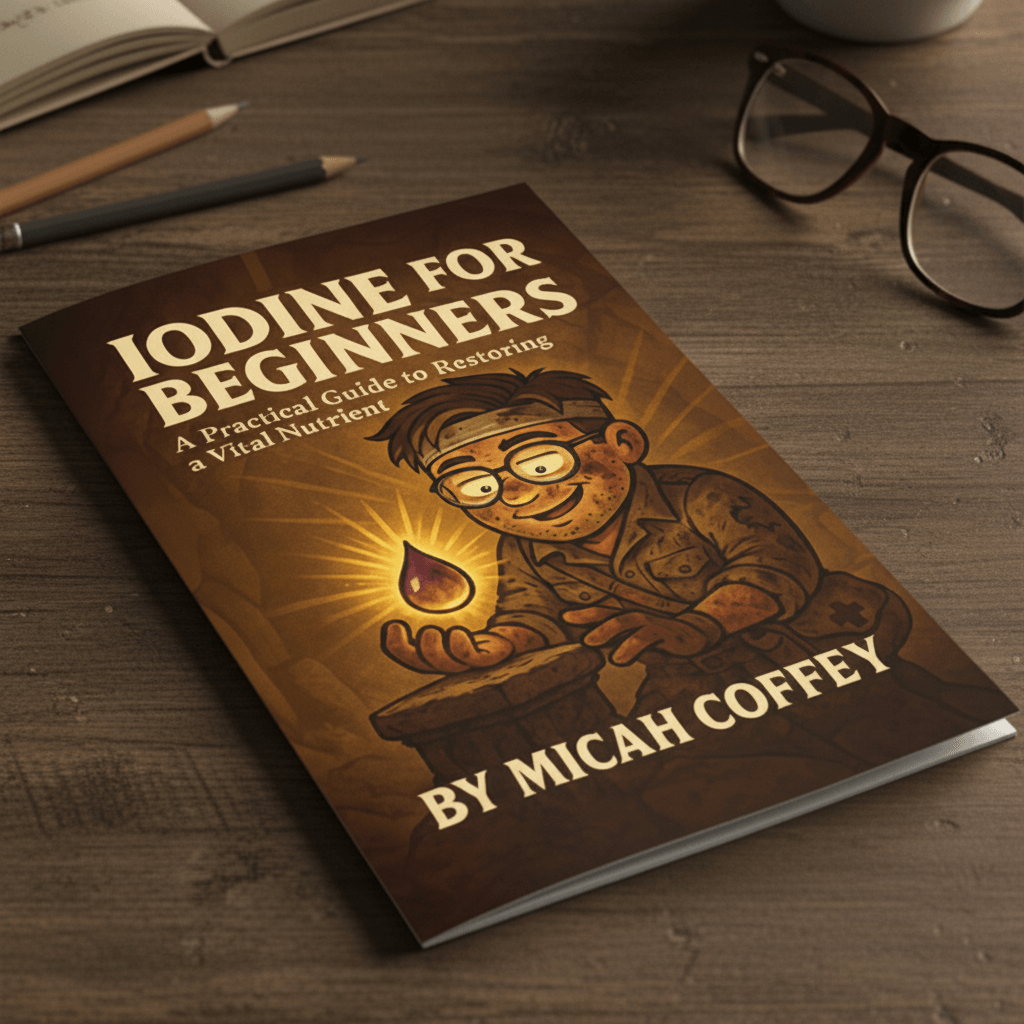
Free eBook
Everything covered on this site — condensed into a short, free book. How deficiency happens, what detox looks like, and how to start restoring what our bodies have been missing.
Our bodies are constantly processing what we take in. When we finally give them the right tools, they start cleaning house.
We are made of trillions of cells that take nutrients from our diet and environment, converting them into whatever the body needs. The problem? Our diet and environment are increasingly toxic, and our food is grown with profit in mind, not nutrition.
Toxins do not magically disappear — they have to be processed by nutrition and healthy cells. Without enough good nutrients to handle the toxins we encounter, or facing a constant onslaught of toxicity, we end up storing them. Many toxins mimic the nutrients our cells prefer, causing damage or shutdown when used in place of proper nutrition.
This is the fundamental mechanism: cells need specific nutrients to function. When those nutrients are missing and toxic imposters are present, cells use what is available — and the result is dysfunction. Bromine mimics iodine. Fluoride mimics iodine. Lead mimics calcium. Mercury mimics zinc. The body is not broken — it is working with bad materials.
The body does not distinguish between nutrients and toxins that look similar at the molecular level. When iodine receptors are empty and bromine is available, bromine gets used. When calcium is low and lead is present, lead gets stored in bones. Detox is the process of providing the real nutrients so the imposters can be displaced and eliminated.
The word "detox" has been co-opted by the wellness industry to sell juice cleanses, foot pads, and expensive supplement packages. This has made many people — including doctors — skeptical of the entire concept. But real detoxification is not a product. It is a biological process that happens in every cell, every day.
The liver, kidneys, gut, lungs, and skin are constantly processing and eliminating metabolic waste and environmental toxins. This is not alternative medicine — it is basic biochemistry. The question is not whether detoxification happens, but whether the body has enough nutritional resources to keep up with the toxic load.
When we talk about "detox" in the context of the iodine protocol, we mean providing the body with specific nutrients — iodine, selenium, magnesium, unrefined salt, vitamin C, and B vitamins — that enable it to displace stored toxins and process them for elimination. Nothing mystical. Just nutrition enabling biology.
Iodine triggers detox through two primary mechanisms: halide displacement and apoptosis (programmed cell death of damaged cells). Both are natural processes that the body has always been designed to perform — it just needs the raw materials.
Halide displacement is straightforward: iodine is a halogen, and it competes with other halogens (bromine, fluoride, chlorine) for receptor sites throughout the body. When adequate iodine is provided, it displaces these toxic halogens from the thyroid, breast tissue, ovaries, prostate, and every other iodine-concentrating tissue. The displaced halogens enter the bloodstream and must be eliminated — primarily through the kidneys.
Apoptosis is the body's quality control system. Cells that are too damaged to function properly are flagged for self-destruction and replaced with new, healthy cells. Iodine is known to promote apoptosis in damaged and abnormal cells. This is one reason iodine has historically been studied in relation to cancer — it helps the body identify and eliminate cells that have gone wrong.
Iodine displaces bromine, fluoride, and chlorine from receptor sites. These displaced toxins enter the bloodstream for elimination.
Iodine promotes programmed cell death of damaged cells. The body replaces them with healthy new cells.
Temporary discomfort as mobilized toxins move through the body toward elimination. A sign the process is working.
Toxins are flushed out through kidneys (urine), skin (sweat), lungs (breath), and gut (stool). Salt loading accelerates this.
Detox symptoms — headaches, fatigue, skin breakouts, brain fog, body odor, mood changes — are uncomfortable. The natural instinct is to stop whatever is causing them. But these symptoms are not signs that something is going wrong. They are signs that something is finally going right.
When bromine that has been stored in tissue for years is suddenly mobilized into the bloodstream, it causes symptoms on its way out. This is no different from how a deep cleaning of a neglected house raises dust before it settles. The dust was always there — it just was not visible until someone started cleaning.
The key distinction is between detox symptoms (which come and go, shift in character, and respond to salt loading) and adverse reactions (which are persistent, worsening, and do not respond to supportive measures). Learning to read the body's signals is one of the most valuable skills developed during the protocol.
“Healing is messy. Especially when we’ve been running on backup systems, filled with junk, and suddenly the cleaning crew (iodine) shows up with a flamethrower and a clipboard.”
The liver processes toxins in two distinct phases, and both must be functioning well for detox to complete successfully. When phase 1 is active but phase 2 is sluggish, partially processed toxins (which can be MORE reactive than the originals) build up and cause problems.
The iodine protocol inherently supports all three phases: B vitamins support phase 1, selenium and vitamin C support glutathione production for phase 2, and unrefined salt supports kidney elimination in phase 3. This is not accidental — the protocol was designed with these pathways in mind.
Phase 1: Activation (Cytochrome P450)
The liver uses a family of enzymes called cytochrome P450 to oxidize, reduce, or hydrolyze fat-soluble toxins. This converts them into intermediate compounds that are often more reactive and potentially more toxic than the originals. B vitamins, especially B2, B3, B6, and B12, are essential cofactors for phase 1.
Phase 2: Conjugation
The reactive intermediates from phase 1 are attached (conjugated) to molecules that make them water-soluble and ready for elimination. This requires amino acids (glycine, taurine, glutamine), sulfur compounds (from cruciferous vegetables and NAC), and glutathione. Without adequate phase 2 support, phase 1 products accumulate and cause damage.
Phase 3: Elimination
The now water-soluble toxins are excreted through bile (into the gut for elimination in stool), through the kidneys (into urine), through sweat, and through exhaled air. If the gut is constipated, bile-bound toxins can be reabsorbed — which is why regular bowel movements are essential during detox.
“Baths are more than self-care fluff. They’re an underrated detox tool that helps open up one of the largest elimination channels we have: our skin.”
Learn about the specific toxins we encounter and how the iodine protocol addresses them.